Spec-to-Sale Attribution: How Manufacturers Can Finally Prove Marketing’s Impact on the Job Site
For decades, building material manufacturers have operated in a strategic vacuum. You invest millions in architectural specifications, CEU courses, and contractor loyalty programs, only to watch that demand vanish into a "black box" once it hits the dealer channel. While you can track digital engagement and sample requests, the connection between a spec in the design phase and a final sale at the lumberyard has remained largely anecdotal.
In an era where every marketing dollar is under scrutiny, "gut feel" is no longer a viable strategy for market share growth. To drive predictable revenue, manufacturers require a sophisticated approach to spec-to-sale attribution. This isn't just about tracking clicks; it’s about manufacturer ROI tracking that bridges the gap between demand creation and project fulfillment.
The Invisible Chokepoint: Why Traditional Tracking Fails
The primary challenge in building material sales analytics is the fragmentation of the supply chain. When an architect specifies your product or a contractor selects your brand for a bid, that intent is often lost as the project moves through the estimating and procurement stages.
Without visibility into the dealer transaction, you face several critical risks:
- Brand Substitution: Dealers may swap your spec for a competitor’s product based on higher margins or immediate availability.
- Inaccurate ROI: Marketing teams cannot prove which campaigns actually resulted in "trucks on the job site."
- Fragmented Channel Analytics: You see total sales volume by region but lack the granular data to know why sales are up in one ZIP code and down in another.
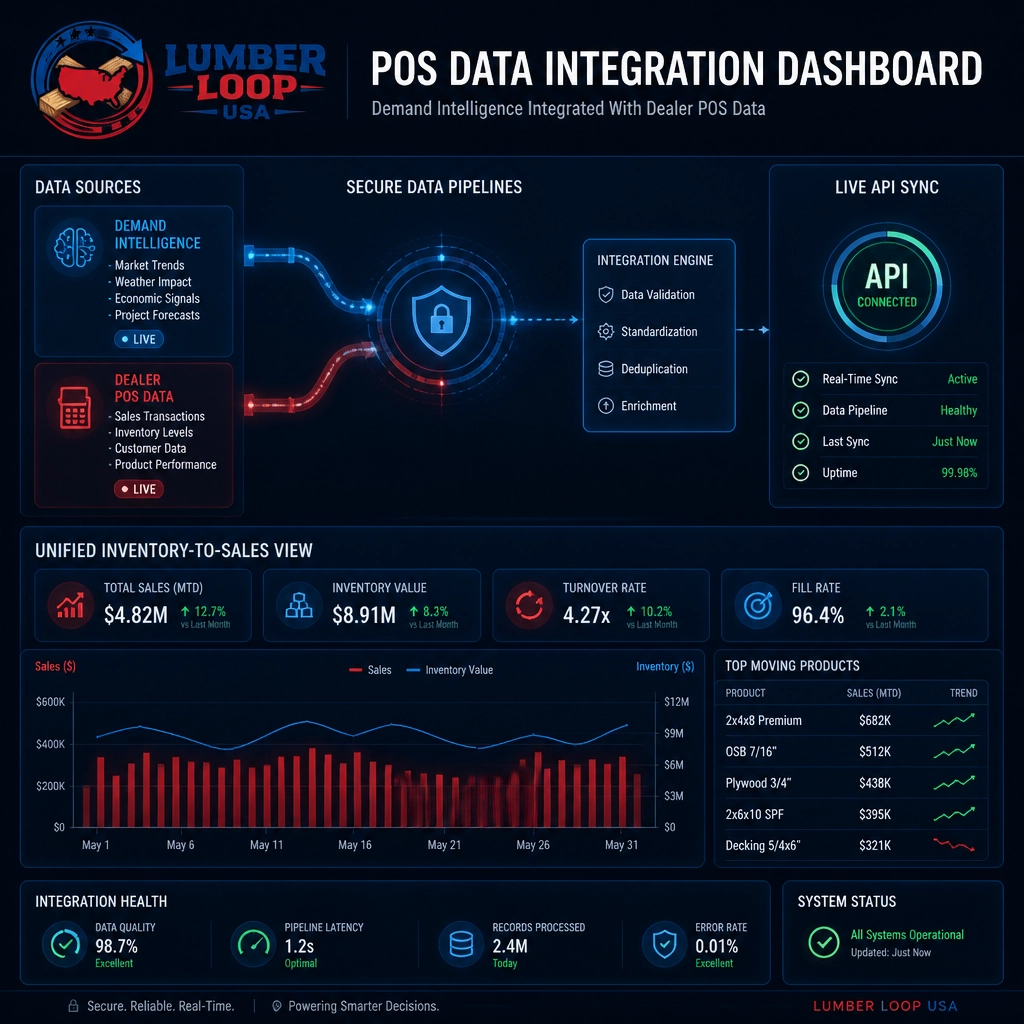
To solve this, leading manufacturers are moving toward demand intelligence: a data-driven framework that captures project intent at the moment of request and follows it through the supply chain.

Transforming Demand Intelligence into Manufacturer Channel Analytics
To achieve true spec-to-sale attribution, manufacturers must shift from tracking individual leads to tracking project-level data. This requires a digital marketplace environment where demand is centralized and transparent.
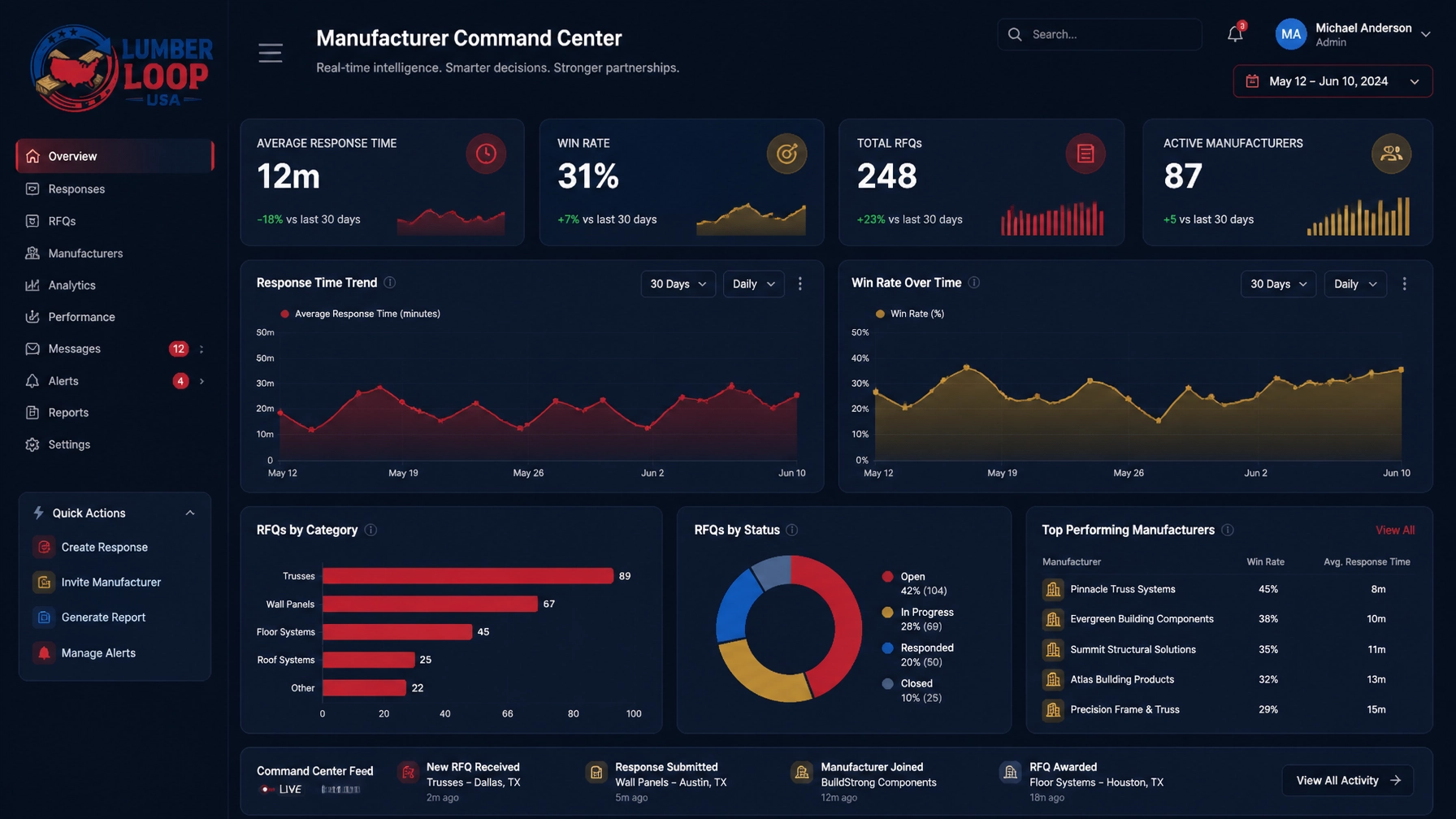
By leveraging platforms like Lumber Loop U.S.A., manufacturers gain a "Manufacturer Command Center" view of the market. This goes beyond traditional CRM data by providing real-time insights into what is actually being quoted in the field.
1. Real-Time Visibility Into "Request for Quotes" (RFQs)
When a contractor submits a request for materials: whether it's siding, insulation, or hardware: they are providing the most valuable data point in the industry: current project demand.
By capturing these specs digitally, manufacturers can see:
- Which product lines are currently in high demand in specific regions.
- The exact volume of materials being requested before the sale is even finalized.
- How often their brand is being specifically named in RFQs versus generic material requests.
2. Monitoring Dealer Performance and Win Rates
Channel analytics are only as good as the data coming from your partners. If you provide leads to a dealer network, you need to know what happens next. Are your dealers responding within minutes, or are they letting leads grow cold?
Tracking dealer performance metrics: such as average response time and win rates: allows manufacturers to identify their most efficient channel partners and reallocate support to those who are successfully converting specs into sales.
Proving Marketing ROI Through Multi-Touch Attribution
In the construction industry, the buying cycle is long and involves multiple stakeholders. A simple "last-click" attribution model doesn't work. You need to see how your architect-facing content (like BIM objects or technical specs) influences the eventual contractor bid.
Strategic manufacturer ROI tracking should account for:
- The Spec Win: Your product is named as the "basis of design."
- The Bid Opportunity: Contractors request quotes for your product via a digital marketplace.
- The Conversion: The dealer fulfills the order, and the project is completed.
By connecting these dots, marketing leaders can finally correlate their spend on educational content or technical fasteners with actual market share gains.

Identifying Lost Sales and Growing Market Share
One of the most powerful outcomes of advanced building material sales analytics is the ability to identify "lost sales." In a traditional model, you only know what you sold; you have no visibility into what you didn't sell.
Demand intelligence changes the equation. If you see a high volume of RFQs for your specific product category in a region where your sales are lagging, you have identified a gap in your dealer network or a service issue. You can then take proactive steps:
- Targeted Outreach: Direct your sales team to support dealers in high-demand ZIP codes.
- Inventory Optimization: Ensure manufacturers' reps are pushing the right SKUs based on actual regional trends.
- Competitive Analysis: See how often your brand is being substituted and which competitors are winning those bids.
For a deeper dive into how digital tools are replacing traditional sales methods, see our analysis on why cold calls are no longer the primary driver for construction leads.
The Executive Advantage: Data-Driven Decision Making
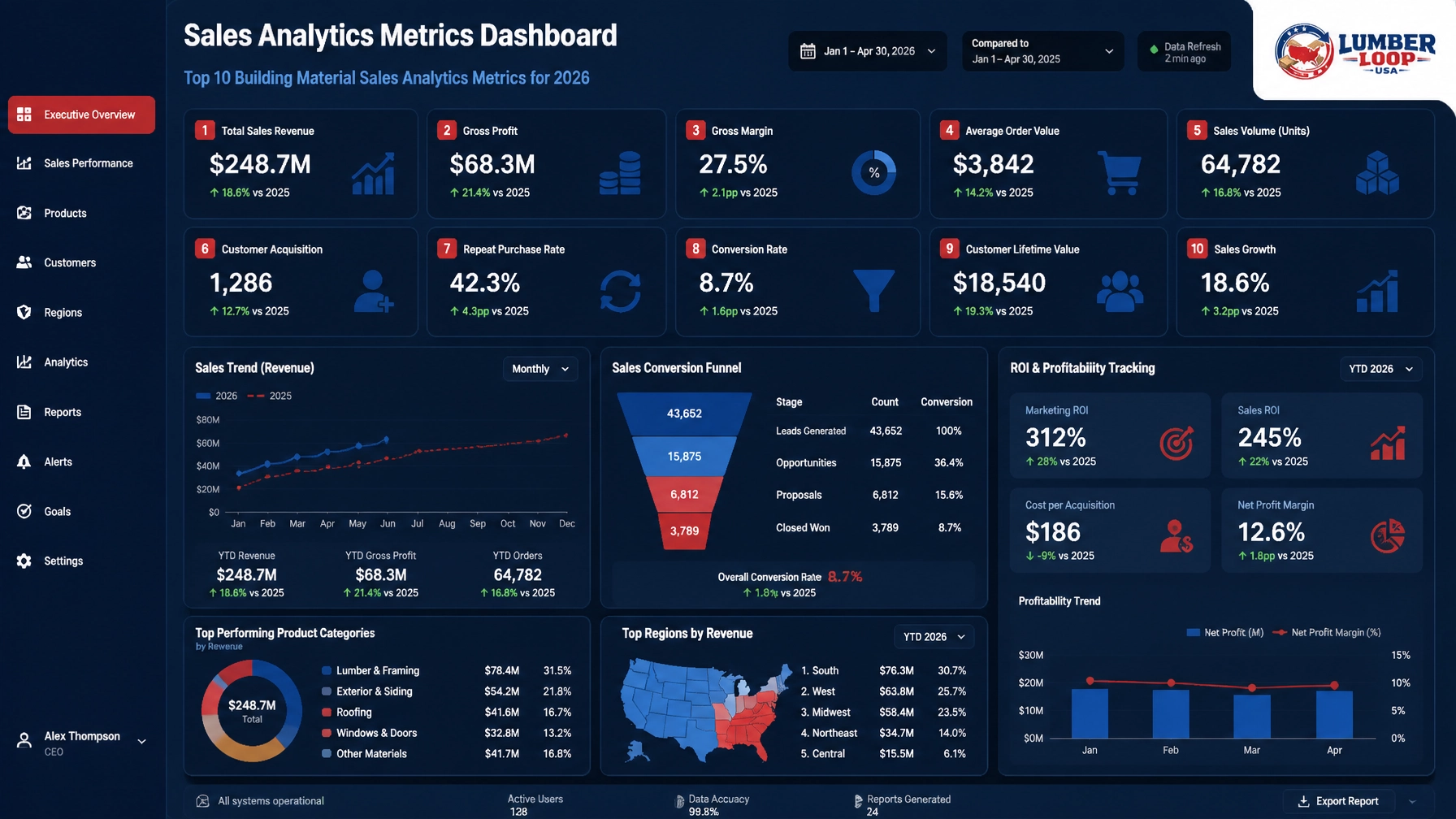
For VPs of Sales and Marketing, the goal is to transition from a defensive posture: reacting to market fluctuations: to an offensive one. A robust spec-to-sale attribution framework provides the executive team with a clear roadmap for growth.
- Regional Demand Heat Maps: Visualize exactly where the next 12 months of demand are coming from based on current quoting activity.
- Channel Efficiency Benchmarks: Compare your dealer network's performance against industry standards to drive better accountability.
- Optimized Marketing Spend: Allocate budget to the regions and product categories that show the highest "Spec-to-Sale" conversion rates.

Conclusion: From Guesswork to Intelligence
The construction supply chain is becoming increasingly digital. Manufacturers who continue to rely on manual sales reports and fragmented dealer data will find it impossible to prove their marketing impact or defend their market share against more agile, data-driven competitors.
By implementing spec-to-sale attribution through demand intelligence platforms, you can finally close the loop. You gain the ability to see every spec, track every bid, and measure every sale. It’s time to move beyond the black box and start leading with data.
To learn more about how to integrate your products into a high-performance demand ecosystem, visit our Manufacturers Portal and discover how we bridge the gap between design and delivery.
Get matched with local dealers in minutes.
Submit your material needs and ZIP — we'll route to the closest qualified dealers in your market.
Request a Quote