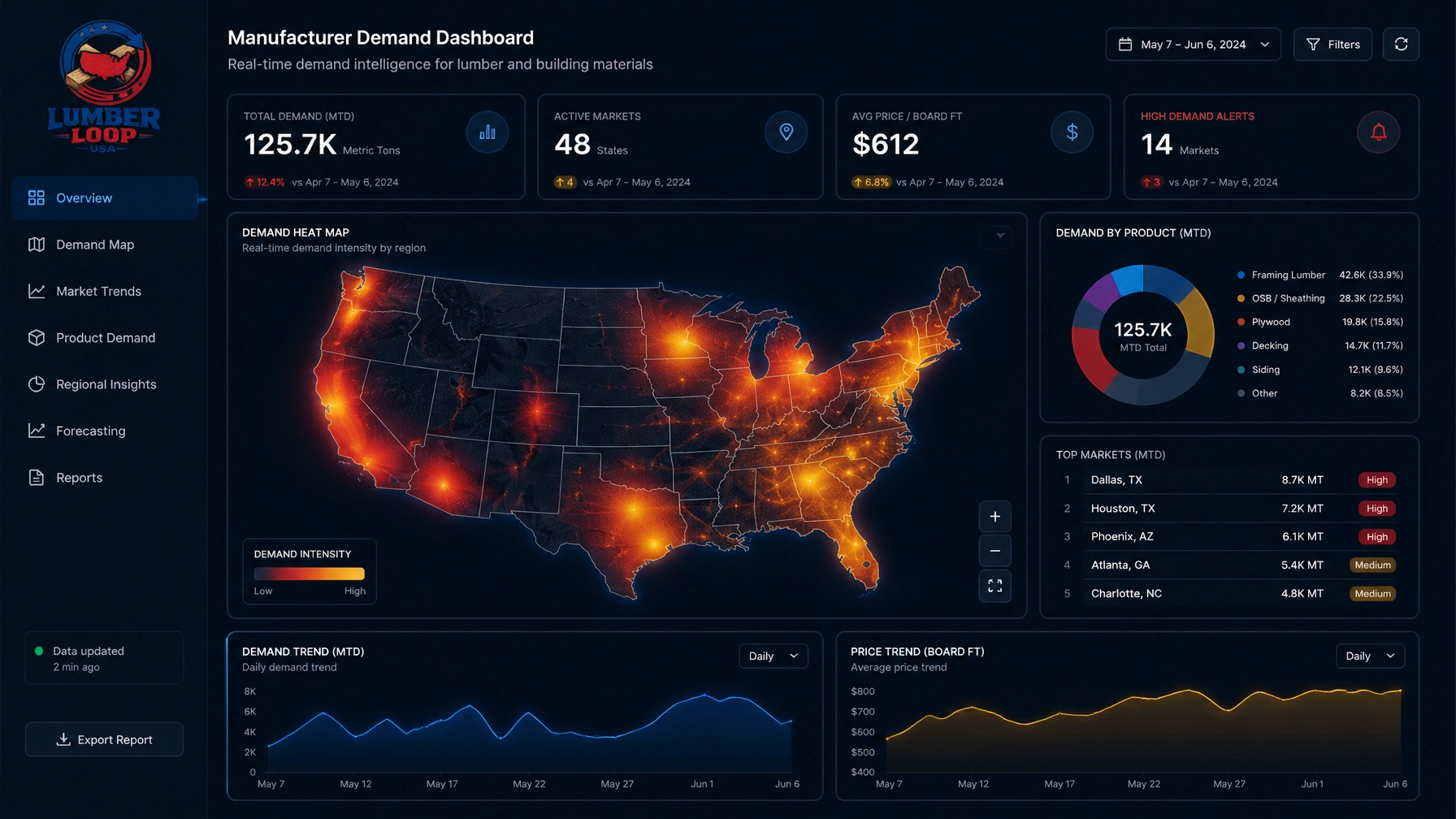
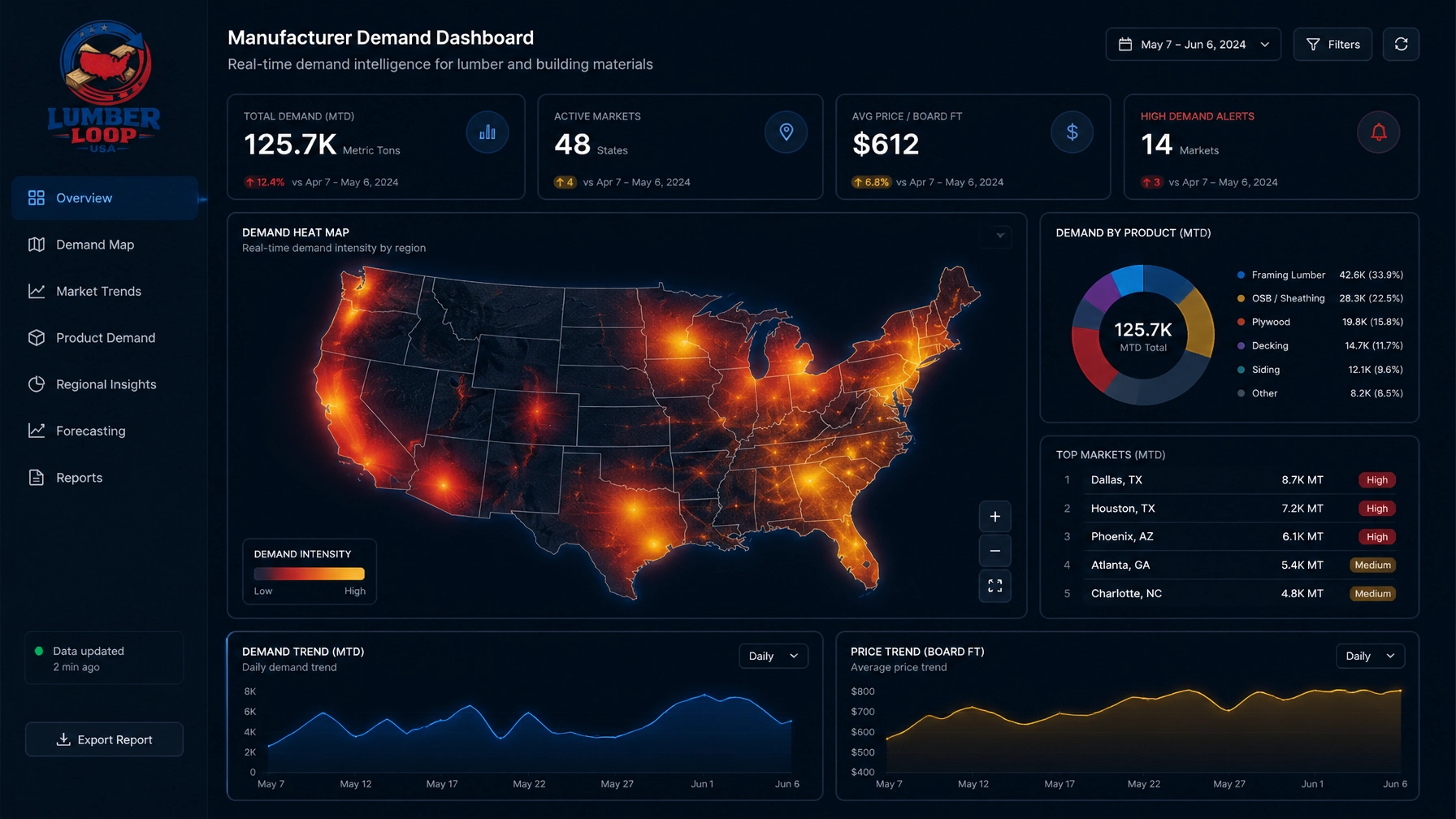
The Hidden Cost of the Dealer Handoff: Where Manufacturer-Generated Demand Goes
Your marketing team generates demand. Your website captures product interest. A buyer identifies the right product, enters a ZIP code, and clicks through to a dealer.
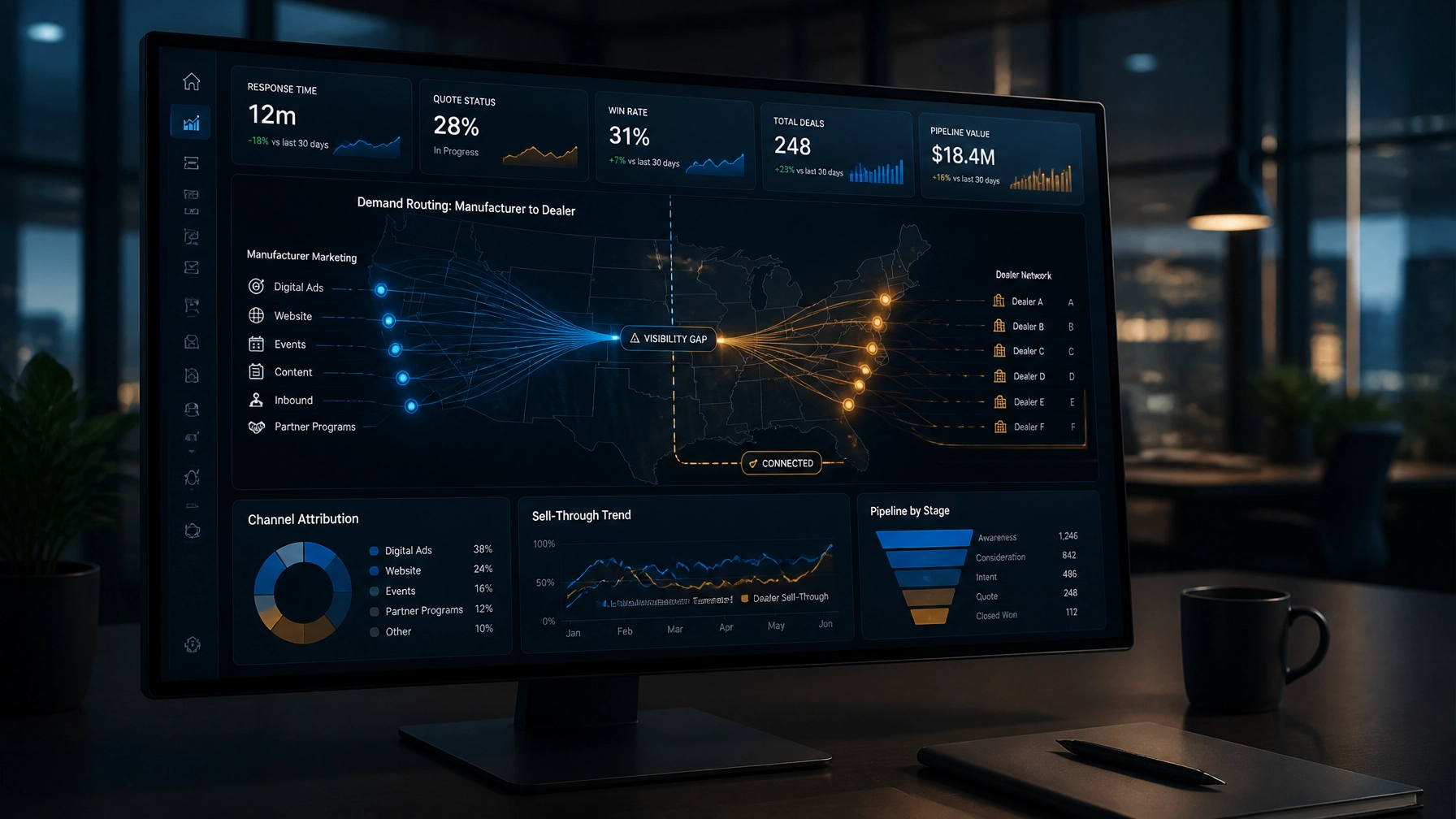
Then visibility stops.
You may know that a buyer used your dealer locator. You may know which region produced the interaction. You may even know which dealer received the referral.
But can you confirm that the dealer responded? Can you see whether a quote was issued, whether the requested product was available, or whether the buyer ultimately purchased a competing product?
If not, the dealer handoff is more than a customer-experience gap. It is a manufacturer revenue and intelligence gap.
The dealer locator is not the problem. The problem is treating it as the end of the customer journey instead of the beginning of a measurable demand-capture process.
The Dealer Locator Creates a Visibility Gap
A traditional dealer locator is built to answer one question:
Where can a buyer find a dealer?
That remains useful. But for manufacturers investing in brand awareness, product marketing, digital campaigns, and channel development, the more important questions begin after the referral:
- Was the buyer contacted?
- How quickly did the dealer respond?
- Was the requested product quoted?
- Was the product in stock?
- Did the dealer recommend a substitute?
- Was the opportunity won, lost, or abandoned?
- Did the transaction appear in dealer POS or sell-through data?
- Can the sale be connected to the original campaign or product interaction?
A static locator typically cannot answer these questions. It transfers demand to the channel without creating a shared record of what happens next.
That produces a blind handoff. Marketing measures visits and clicks. Dealers manage opportunities in separate systems. Sales leaders review shipment data. Channel teams rely on anecdotal feedback.
Each group sees part of the journey. No one sees the full path from manufacturer demand creation to channel revenue.
Where Manufacturer-Generated Demand Leaks
Revenue leakage at the dealer handoff does not always look like a lost order. Often, it appears as missing data, delayed action, or an outcome that cannot be attributed.
1. No confirmation of contact
A referral is not the same as a qualified opportunity.
If you cannot confirm that a dealer received, opened, and acted on a referral, you cannot distinguish active pipeline from unaddressed demand. A buyer may be ready to purchase while the opportunity remains invisible in the dealer’s workflow.
2. Response-time blindness
Response time is one of the clearest indicators of channel execution. Yet many manufacturers cannot compare dealer response times across branches, regions, or product categories.
Without this visibility, you cannot identify:
- Dealers consistently responding within the expected service window
- Regions where high-intent demand is receiving slow follow-up
- Product categories with delayed quoting
- Opportunities aging without a documented next step
A missed response is not merely a service issue. It can redirect demand toward a more accessible supplier.
3. No quote visibility
Once a referral becomes a quote, the manufacturer often loses the thread.
You may not know the quoted product, quantity, price range, lead time, or whether the dealer offered an alternative. This makes it difficult to determine whether the manufacturer’s product was represented accurately or whether availability and pricing created friction.
Quote visibility is the bridge between buyer intent and channel performance. Without it, your reporting ends before the commercial decision is made.
4. No win/loss attribution
A closed sale can be difficult to connect to the original demand source. A lost sale is even harder.
If opportunity status is not captured, you cannot reliably answer:
- Which product inquiries became orders?
- Which campaigns generated won opportunities?
- Where were buyers lost to competitors?
- How often did product substitutions occur?
- Which dealers convert manufacturer-generated demand most effectively?
This is the core of opportunity management for manufacturers: understanding not only that demand existed, but how it progressed and why it ended.
5. Outdated dealer information
A locator with inaccurate service areas, inactive branches, old contact information, or incomplete product capabilities can route demand to the wrong partner.
That creates friction before the dealer ever has a chance to perform. It can also distort network analytics by making a region appear under-served when the real issue is inaccurate routing data.
6. Inventory mismatch
A buyer can express strong demand for a product that is unavailable through the selected dealer.
If inventory signals are disconnected from demand capture, the manufacturer may interpret weak sell-through as weak market interest. In reality, the opportunity may have been lost because the right product was not positioned in the right location at the right time.
7. No connection between marketing and sell-through
Marketing activity often stops at the locator visit, form submission, or referral. Dealer sell-through exists somewhere else, measured through POS data, shipment reports, or periodic partner updates.
When those systems are not connected, manufacturer ROI tracking becomes incomplete. You can report engagement, but not the channel outcome that justifies the investment.
Turn the Locator Into a Demand-Capture Layer
The strategic shift is simple:
A dealer locator should not end the journey. It should instrument the journey.
A measurable demand-capture layer connects the original buyer-intent signal to dealer routing, response activity, opportunity status, quote outcomes, and: where available: POS or sell-through data.
This creates dealer network visibility across the metrics that matter most:
- Demand volume by product, ZIP code, region, and source
- Dealer routing and coverage
- Response time and contact confirmation
- Quote creation and aging
- Win/loss status
- Substitution and abandonment
- Inventory availability at the time of inquiry
- Sell-through by product, branch, and market
- Campaign-to-opportunity and opportunity-to-revenue attribution

With this view, a low-performing market no longer produces a single vague conclusion. You can determine whether the issue is insufficient demand, weak dealer coverage, slow response, poor inventory alignment, pricing, competitive substitution, or incomplete reporting.
That distinction changes how you allocate resources.
Instead of automatically increasing media spend or adding dealers, you can identify the specific point where demand is being lost.
Connect Buyer Intent to Dealer Performance
Manufacturer channel analytics are most valuable when they connect demand signals to partner execution.
A centralized view can help you compare dealers using both leading and lagging indicators.
Leading indicators
- Average response time
- Contact rate
- Quote completion rate
- Opportunity aging
- Product availability
- Follow-up consistency
- Demand coverage by territory
Outcome indicators
- Quote win rate
- Lost opportunity volume
- Substitution rate
- Order conversion
- POS sell-through
- Product mix
- Regional revenue contribution

This does not turn every dealer into an identical operating unit. It gives you a consistent framework for understanding performance across a diverse network.
You can recognize high-performing partners, identify under-served markets, and focus enablement where the gap between demand potential and channel execution is greatest.
The result is a more productive manufacturer-dealer relationship: one based on shared evidence rather than periodic reporting and individual anecdotes.
Close the Manufacturer ROI Loop
Manufacturers make significant investments in product launches, paid search, content, specifications, events, dealer programs, and market development funds.
If measurement ends when a buyer clicks “Find a Dealer,” your ROI model is incomplete.
A more useful attribution path looks like this:
- Demand source: campaign, website, product page, specification tool, or marketplace
- Product intent: product family, SKU, application, quantity, or timeline
- Market: ZIP code, branch, territory, or region
- Dealer routing: partner receiving the opportunity
- Dealer activity: contact, response time, quote, and follow-up
- Opportunity outcome: won, lost, substituted, abandoned, or unresolved
- Sell-through: order, POS transaction, or other validated channel outcome

This framework lets you ask questions with greater strategic value:
- Which campaigns create opportunities dealers can successfully convert?
- Which products generate interest but underperform at sell-through?
- Which regions have demand that exceeds current dealer coverage?
- Which dealers produce the strongest win rates for your products?
- Where are buyers being substituted into competing brands?
- Which product launches are creating measurable channel pull-through?
- Where should marketing, inventory, or channel investment change?
The objective is not to overstate attribution or assume that every referral should become a sale. The objective is to create enough visibility to make better decisions and identify preventable leakage.
Lumber Loop: From Referral to Channel Intelligence
Lumber Loop is built to help manufacturers connect buyer intent with dealer execution.
The platform can bring together the signals that are usually separated across marketing systems, dealer communications, quoting workflows, and sales reporting:
- Buyer demand by product and geography
- Intelligent dealer routing
- Response-time tracking
- Quote and opportunity status
- Dealer performance
- Channel-level conversion metrics
- POS and sell-through data connections
Learn more about Lumber Loop’s manufacturer-focused approach to demand capture and dealer network visibility.
You can also explore how demand intelligence can connect with existing dealer POS data and how spec-to-sale attribution can improve manufacturer marketing measurement.
The Question Your Dealer Locator Cannot Answer
Your dealer locator may be sending valuable demand into the channel every day.
But what happens after the click?
If you cannot see whether the buyer was contacted, quoted, served, won, lost, or converted through POS sell-through, then your demand-capture strategy stops at the handoff: and so does your manufacturer ROI tracking.
The future of the dealer locator is not another directory of branches. It is a measurable demand and channel-intelligence layer that helps you understand where revenue is created, where it stalls, and where market share may be slipping away.
The most important opportunity in your dealer network may not be the demand you can already see.
It may be the demand you have never been able to follow.
Learn how Lumber Loop can help you measure what happens after the dealer handoff.
Get matched with local dealers in minutes.
Submit your material needs and ZIP — we'll route to the closest qualified dealers in your market.
Request a Quote