Stop Wasting Budget on Dealer Locators: Try These 7 Quick Tips
A dealer locator should help buyers find the right channel partner.
But a basic locator can also become one of the least measurable assets in your marketing stack.
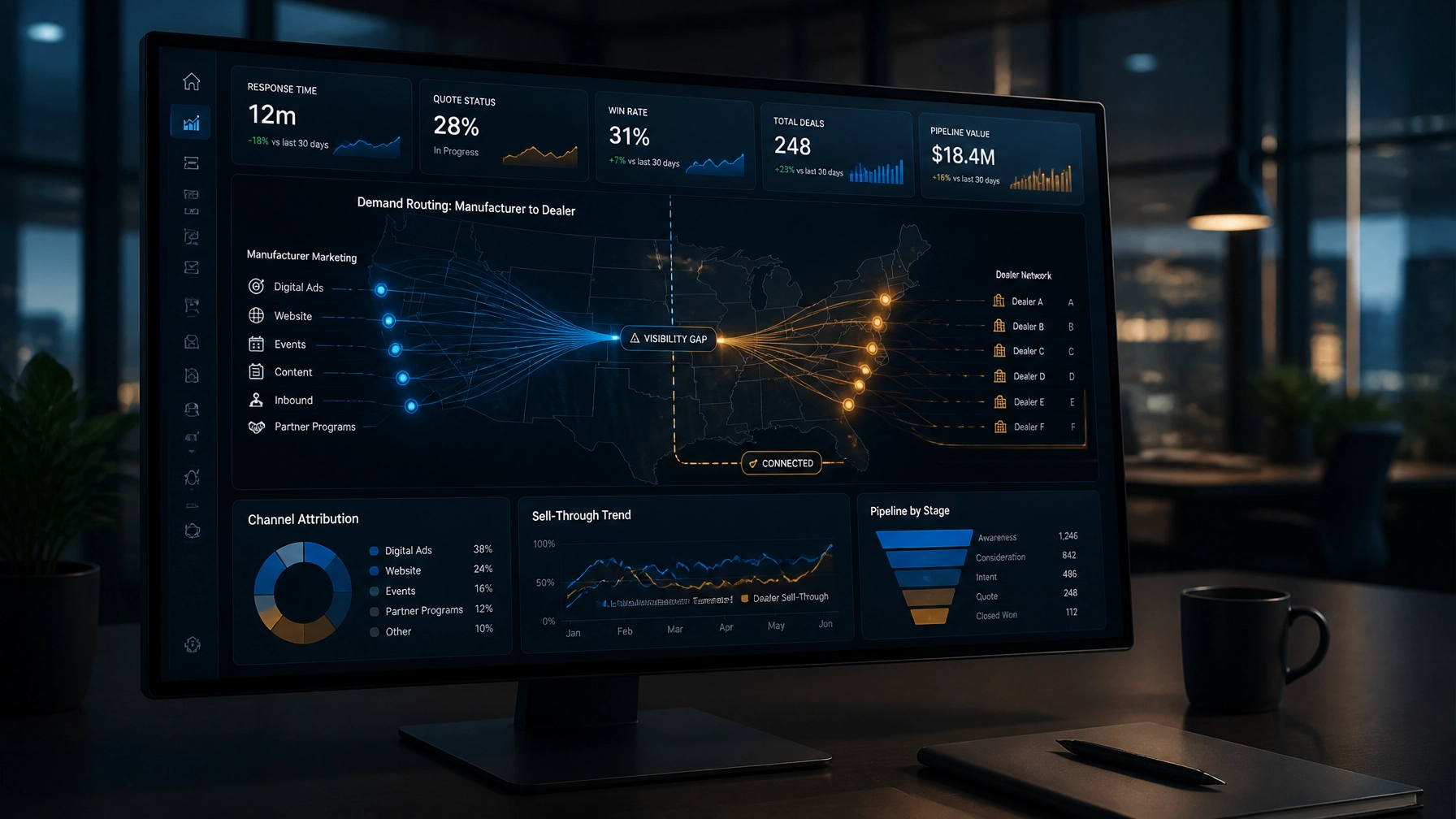
When it only displays dealer names, addresses, and phone numbers, it creates a visibility gap between demand creation and revenue. You may know that thousands of buyers visited your website. You may know which campaigns generated traffic. But once a buyer clicks “Find a Dealer,” the trail often disappears.
That is where revenue leakage begins.
Outdated dealer information can send buyers to the wrong location. Blind lead handoffs make follow-up impossible to monitor. A lack of response-time visibility hides channel friction. Without quote, win/loss, or sell-through attribution, your team cannot determine whether marketing-driven demand became a sale.
The answer is not to eliminate the dealer locator. It is to evolve it into an intelligent, measurable dealer network platform.
Here are seven practical strategies to improve dealer network visibility, strengthen manufacturer channel analytics, and make manufacturer ROI tracking more precise.
1. Treat Dealer Data as Revenue Infrastructure
Your dealer directory is more than a website feature. It is part of your revenue infrastructure.
If dealer records are incomplete or outdated, every downstream activity suffers. Buyers may see locations that no longer stock your products, branches with incorrect hours, or dealers that do not serve their project geography. Those errors create friction at the exact moment purchase intent is highest.
Start by auditing the data behind your locator:
- Dealer and branch names
- Addresses and service areas
- Phone numbers and contact forms
- Product categories and brands carried
- Delivery, design, fabrication, or pickup capabilities
- Inventory or availability indicators
- Last verification date
- Lead-routing contact and escalation path
A reliable locator should also distinguish between a dealer’s corporate profile and its individual branches. Branch-level visibility gives you a clearer view of coverage, performance, and market opportunity.
The strategic benefit is simple: clean dealer data increases buyer trust while giving your sales and marketing teams a more accurate view of the channel.
2. Replace Static Listings with Product-Aware Matching
A buyer searching for a specific product should not receive a generic list of every dealer within 50 miles.
They should see the most relevant dealer based on product category, location, availability, service capability, and expected response.
That requires product-aware matching.
Instead of asking only for a ZIP code, an intelligent platform can capture signals such as:
- Product or SKU category
- Required quantity
- Project location
- Desired timeline
- Delivery requirements
- Product specifications
- Preferred purchase or fulfillment method
These inputs help route demand to dealers that are more likely to respond with a viable quote.
This is an important distinction. A traditional locator measures proximity. A measurable dealer network platform measures relevance.
Over time, those interactions also create demand intelligence for building materials. You can identify which products buyers are searching for, where demand is concentrated, and which regions show interest before that demand appears in shipment data.

3. Make Every Lead Handoff Visible
The biggest problem with many dealer locators is not the first click. It is what happens after the click.
When a manufacturer sends a buyer to a dealer without creating a trackable opportunity, the handoff becomes invisible. Your team cannot confirm whether the dealer responded, whether a quote was issued, or whether the buyer went elsewhere.
To close that gap, capture and route buyer demand as a structured opportunity.
Each opportunity should include:
- Buyer location
- Product requirements
- Quantity and project scope
- Submission date and timeline
- Assigned dealer or branch
- Dealer response status
- Quote status
- Outcome or reason lost
This creates a shared record between your marketing, sales, and channel teams. It also gives dealers a clearer opportunity to act on qualified demand.
Most importantly, you gain visibility into the complete path from buyer discovery to dealer engagement. That is the foundation for stronger manufacturer channel analytics.
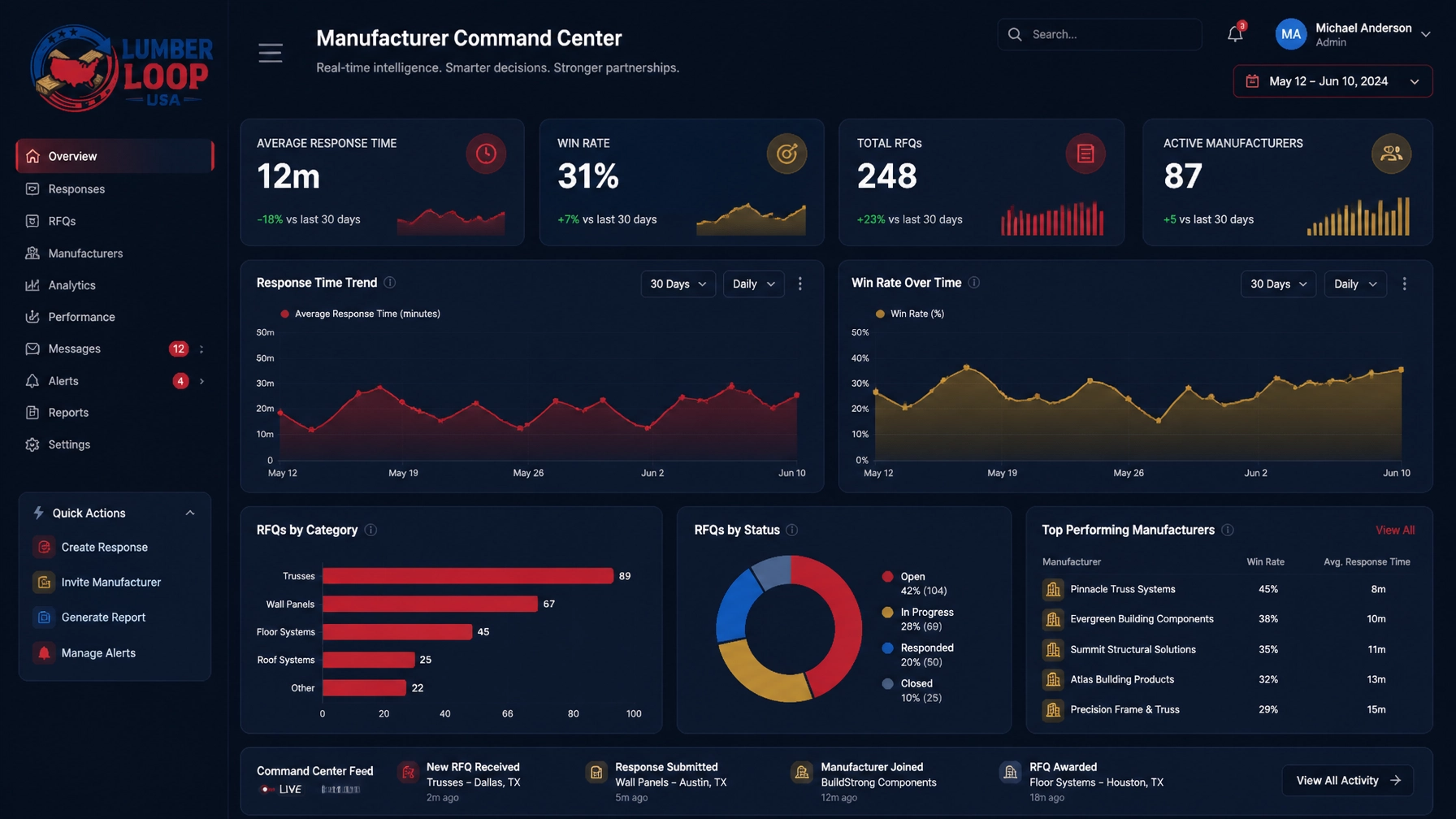
4. Track Response Times as a Channel Performance Metric
A dealer’s response time directly affects the value of the demand you generate.
A lead that sits unanswered for two days is not equivalent to a lead acknowledged within an hour. Yet most basic locators provide no way to compare response performance across dealers or territories.
Introduce clear response-time tracking across the network:
- Time from inquiry to dealer notification
- Time from notification to first response
- Time from inquiry to quote
- Percentage of opportunities receiving a response
- Percentage of quotes delivered within the buyer’s requested timeline
These metrics help you identify where marketing investment is being undermined by slow follow-up.
They also create a more objective framework for dealer development. Instead of relying only on anecdotal feedback, you can see which partners consistently engage with demand and which require support, training, or a revised routing strategy.
Response time is not just an operational metric. It is a leading indicator of conversion and channel health.
5. Connect Locator Activity to Quotes, Wins, and Losses
Traffic and form submissions are useful, but they are not revenue.
To calculate the true value of a dealer locator, connect each opportunity to a measurable commercial outcome. That means tracking whether the buyer received a quote, selected a dealer, purchased your product, or exited the process.
Your manufacturer ROI tracking framework should include:
- Locator visits by product and geography
- Lead volume by campaign and source
- Dealer acceptance rate
- Quote rate
- Win rate
- Average opportunity value
- Lost opportunity volume
- Lost opportunity reasons
- Revenue and margin attributed to the channel
Loss reasons can be especially revealing. A buyer may be lost because of price, unavailable inventory, delayed response, insufficient geographic coverage, or a competing product. Without structured loss data, those issues remain hidden inside the channel.
This is how you move from reporting activity to understanding performance.

6. Use Dealer Performance to Improve Network Coverage
A locator may show that you have dealer coverage in a market. It does not necessarily show whether that coverage is productive.
A market can appear well-served while still losing sales because participating dealers have low inventory, slow response times, limited product knowledge, or weak close rates.
Evaluate dealer performance using a balanced set of indicators:
- Opportunity acceptance
- Response time
- Quote completion
- Win rate
- Product availability
- Sales or sell-through contribution
- Repeat opportunity performance
- Customer satisfaction or follow-up quality
Then compare those indicators by territory, product category, and dealer type.
This analysis can reveal several growth opportunities:
- Markets with strong demand but limited dealer participation
- Dealers receiving demand but producing low win rates
- Product categories with high interest and weak availability
- High-performing dealers that should receive more qualified opportunities
- Territories where a new dealer or manufacturer-supported program could expand share
Dealer network visibility becomes much more valuable when it informs decisions about recruitment, enablement, lead distribution, and market investment.
7. Build a Demand-to-Sell-Through Feedback Loop
The final strategy is to connect digital demand signals with downstream sales data.
Your website, campaigns, locator, and quote activity can show what buyers are actively seeking. Dealer sales and POS data can show what ultimately moved through the channel. Together, those data sources create a more complete view of market performance.
Look for gaps between:
- Search demand and dealer inventory
- Quote volume and order volume
- Regional interest and sell-through
- Campaign engagement and product revenue
- Dealer participation and market share
- Product availability and win rates
These gaps are often where revenue leakage hides.
For example, a region may generate strong demand for a product but show weak sell-through because local dealers do not carry sufficient inventory. Another market may have strong dealer availability but low opportunity volume, indicating a need for more targeted marketing.
This is the strategic value of demand intelligence for building materials: it helps you see emerging demand, channel execution, and commercial outcomes in one connected view.

What an Intelligent Dealer Platform Should Help You Measure
A modern dealer network platform should answer questions your static locator cannot:
- Which campaigns are generating qualified demand?
- Which dealers respond fastest?
- Where are quote opportunities being lost?
- Which product categories have the highest win rates?
- Which territories have unmet demand?
- Are buyers finding a dealer that can actually fulfill the request?
- How much revenue can be attributed to manufacturer-generated demand?
- Where should you invest to grow market share?
The goal is not to replace your existing dealer relationships. It is to give your team the visibility required to support them more effectively.
When dealer data, opportunity tracking, response times, quote outcomes, and sell-through signals are connected, your locator becomes a strategic channel asset instead of a digital dead end.
Turn Your Dealer Locator into a Measurable Growth Channel
A basic dealer locator can help buyers find a location. An intelligent dealer network platform helps you understand what happens next.
That distinction matters for every manufacturer investing in digital marketing, channel programs, and dealer development.
With stronger dealer network visibility and manufacturer channel analytics, you can identify lost sales earlier, prioritize high-performing partners, improve response times, and connect marketing investment to commercial results.
Lumber Loop U.S.A. helps manufacturers see beyond the dealer handoff. Our platform captures qualified demand, routes opportunities to relevant suppliers, and provides visibility into response times, quotes, win rates, and market activity.
Learn how Lumber Loop measures what happens after a buyer finds a dealer.
Get matched with local dealers in minutes.
Submit your material needs and ZIP — we'll route to the closest qualified dealers in your market.
Request a QuoteMore insights
Lead Leakage Is Costing You More Than You Think: Why a CRM Alone Cannot See the Full Buyer Journey
Win-Rate Analytics for Manufacturers: Finding the Dealers Who Actually Close Your Demand